
[Excerpt from GTHL Breakout Magazine] Data is changing the game. Insights into how athleticism impacts skating performance is not only well established, but new insights are being uncovered. We can now understand how ideal skating mechanics are directly related to an athletes’ ability to squat, control their trunk, and the health status of a players’ hips. We also understand how the edge-ice interface or a hockey players’ edge work / agility is related to the subtle ways an athlete lands, changes direction and the symmetry between sides. Finally, for the first time, we can connect how an athlete skates with the mechanism of hip pain, low back pain and common strains to the abdominals and the hip flexor.
We understand how athleticism directly relates to skating performance.
This exciting time, represents a HUGE change in the game. As such, dry-land and the development of hockey athletes are evolving. The game demands that players become faster, more agile, and that understand how to read and react to a faster and faster game.
Likewise, time spent in dryland needs to be prioritized and more systematic. We need to focus on the demands of the changing game by BUIDING BETTER ATHLETES.
This article along with a starter program, and all supporting documents and videos will directly help your skating performance by giving you the tools to evaluate key athletic qualities that determine skating performance. Much like how horse power, torque and handling are key determinants of a race cars’ performance, key athletic qualities ultimately determine skating performance. The Skating Performance Metric Tool has been organized into a) breaking down skating performance into 6 simple questions; b) advanced and simple / in-expensive methods to evaluate and score those questions; and c) key exercises and standards to improve those qualities. By using the tool, a profile of the determinants of skating performance will be created. Now you’ll be able to attack deficiencies during the off-season with clarity and focus. You’ll also be able to monitor and adjust your dry-land program to address your unique profile.
FITS Sample Programs
IMPORTANT DISCLAIMER: These programs do not replace the supervision, feedback or expertise of a health care professional and or strength and conditioning professional. Each athlete requires an evaluation and from there the development of a program to address their unique needs. The intent with these programs is to illustrate a program that aims to develop key qualities. Simple mistakes can magnify into poor development and worse – injuries.
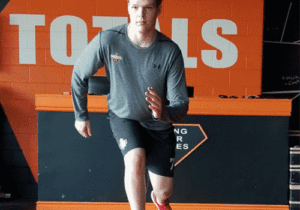
Getting Started – The Single Leg Development Program
This program will help you develop your single leg control which is a primary determinant of skating performance. If you can perform 3 sets of 15 single leg squats to position 3 you will be able to skate well. Challenge ON.
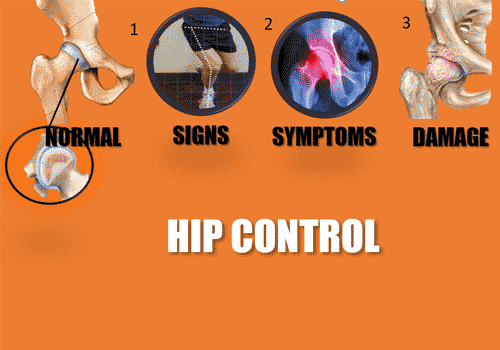
Hip CONTROL Level I
To get you started into a world where HIP Development is more than stretching, but the complete awareness, end-range strength and control, tissue pliability and health, of the hip where MOST of all athletes power is derived. (PLEASE READ THE HIP CONTROL DEVELOPMENT GUIDE before attempting).
Skating Performance Metrics Resources
TOOLS AND GUIDES
Simple click on the image for the link.

THE HIP CONTROL ONLINE GUIDE
Hip mobility, awareness, strength, tissue pliability and health, and awareness make up HIP CONTROL. Learn how to develop your HIP CONTROL with this amazing guide – complete with instructions, videos and even quizes.
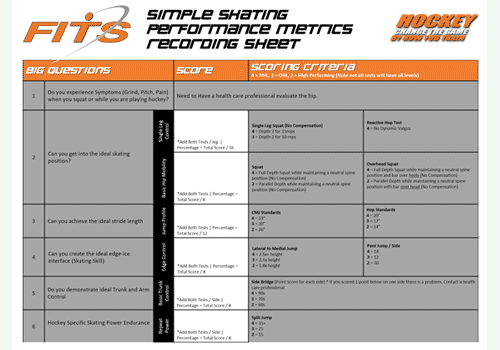
Simple Skating Performance Metric Tool
This tool either in paper format or online with calculator will help show how YOUR score on the athletic qualities that determine skating performance. All tests are explain on this page (See Tests) The results may surprise you.
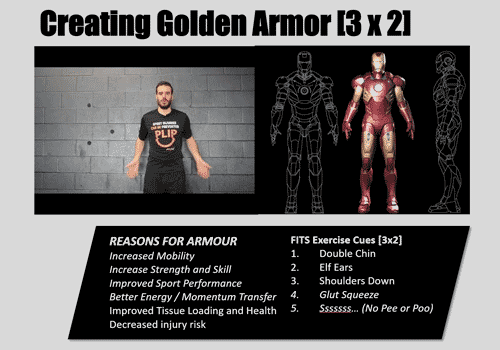
GOLDEN ARMOUR RULES (Activate and Centrate)
At the “CORE” of all movements is the ability to put all the joints in your body in an optimal position – we call this position your Golden Armor. Learn how to put your Armor on.
THE HOCKEY (SPORT) TRIAD
Hip pain, strains to the adductor, hip flexor and lower abdominals, and low back pain for hockey athletes are extremely common and can rob an athlete of their potential. Research indicates there are methods to prevent them.
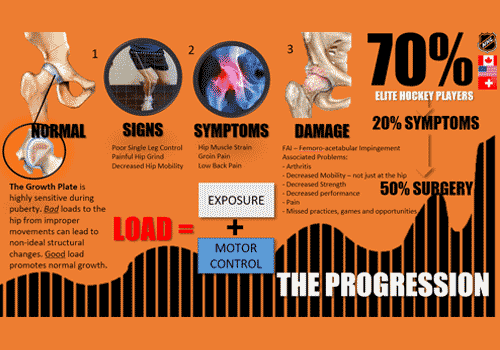
Key Considerations of the HOCKEY (SPORT) TRIAD
- The HIP responds to shear forces that causes it to change shape and become damaged
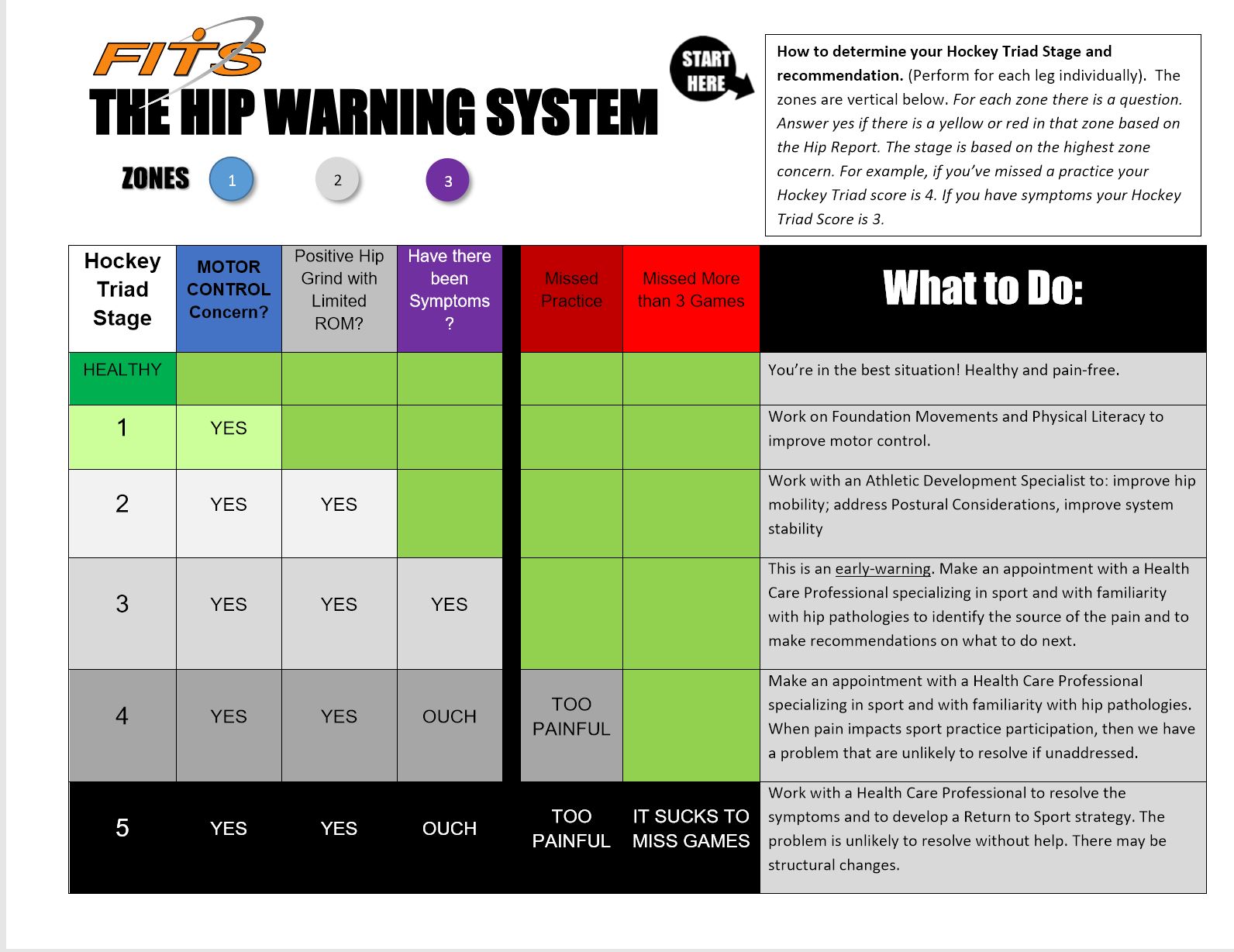
The Hockey TRIAD Early Warning System
This simple tool will help guide you through a systematic method to prevent the hockey triad based on how you move and the present health status of your hips.
TESTS
Simple click on the image for the link.
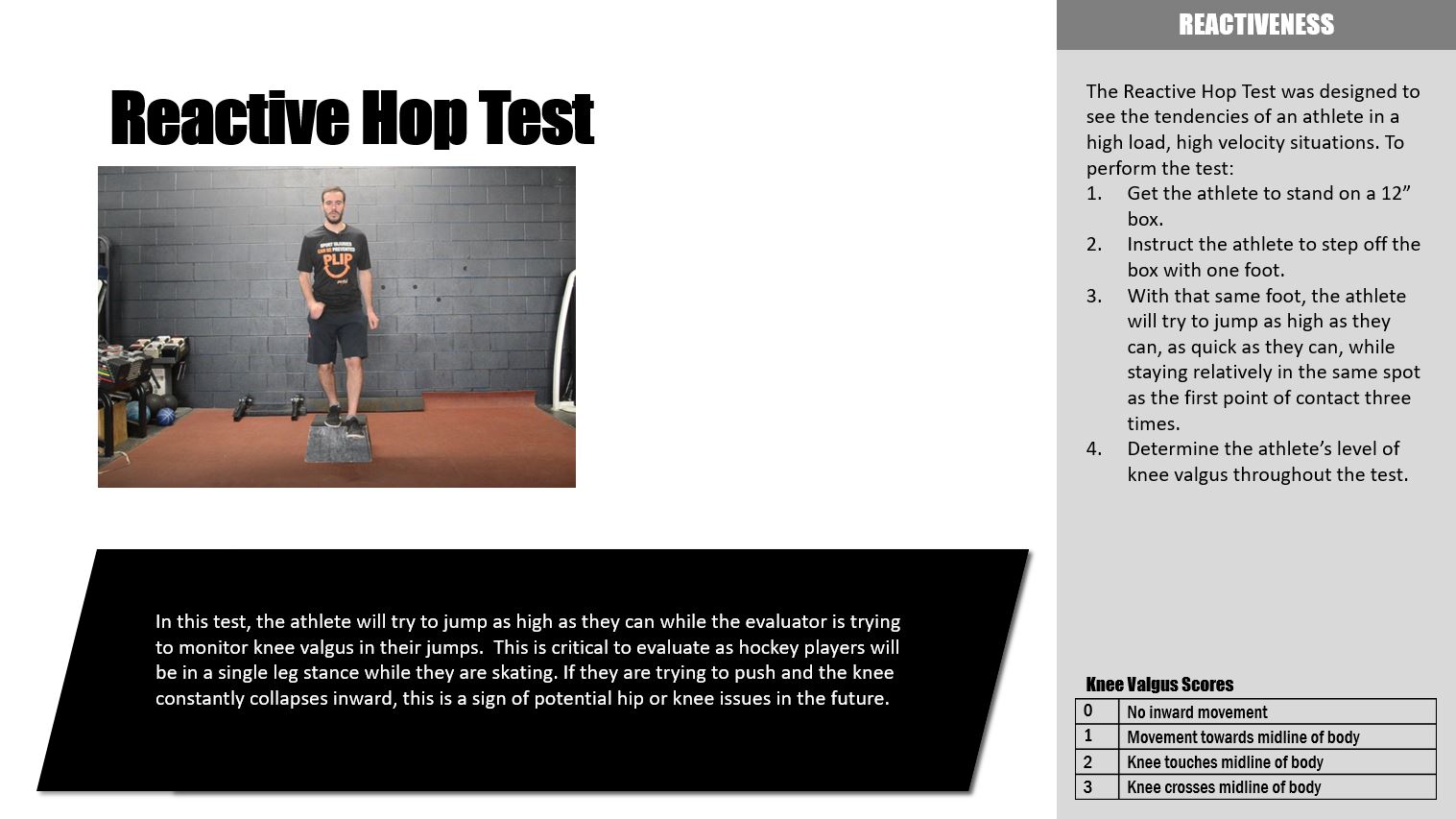
Reactive HOP TEST
The Reactive Hop Test was designed to see the tendencies of an athlete in a high load, high velocity situations.
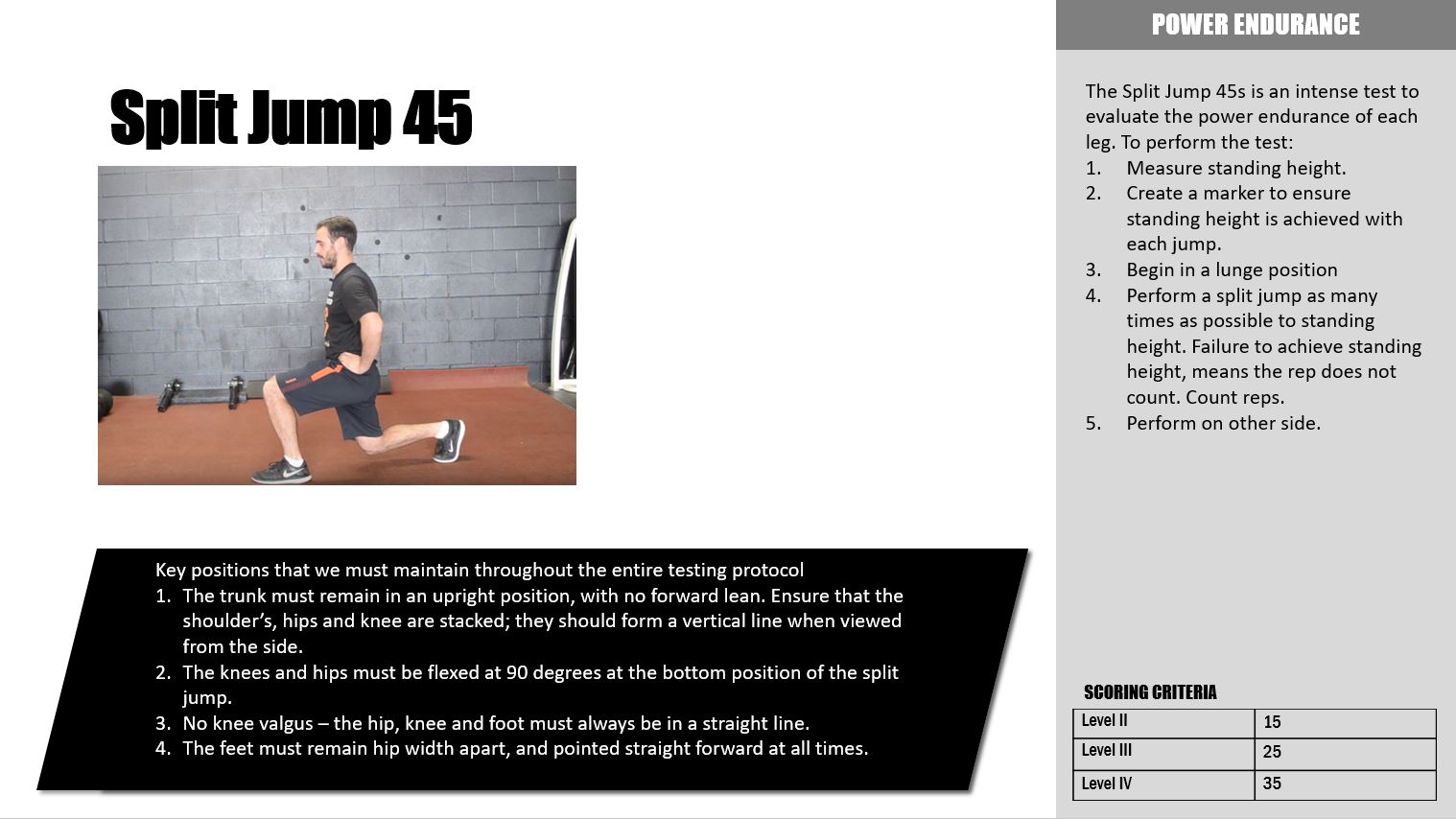
Split Jump 45
The Split Jump 45s is an intense test to evaluate the power endurance of each leg.
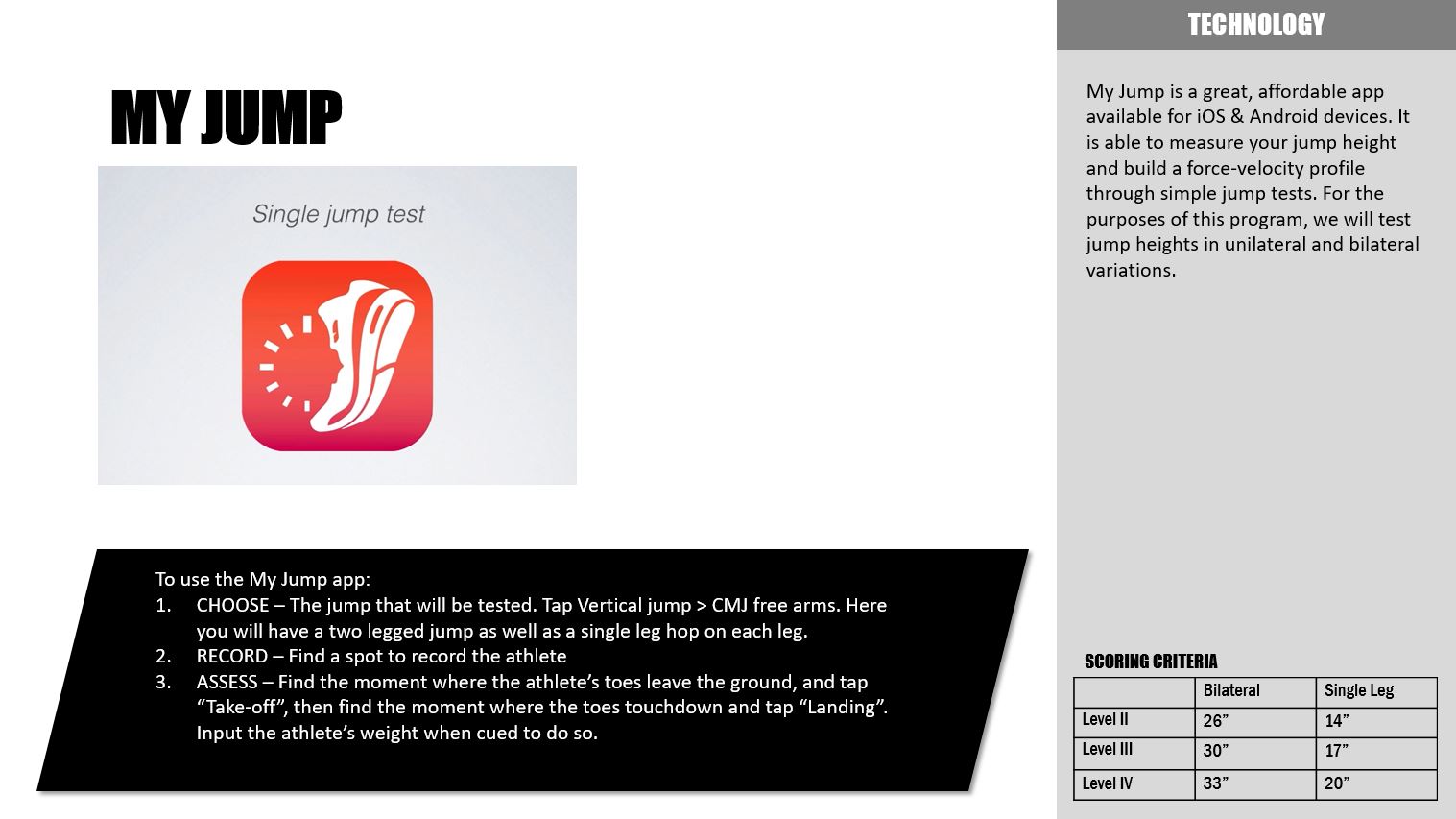
My Jump for Hop and CMJ
My Jump is a great, affordable app available for iOS & Android devices. It is able to measure your jump height and build a force-velocity profile through simple jump tests.
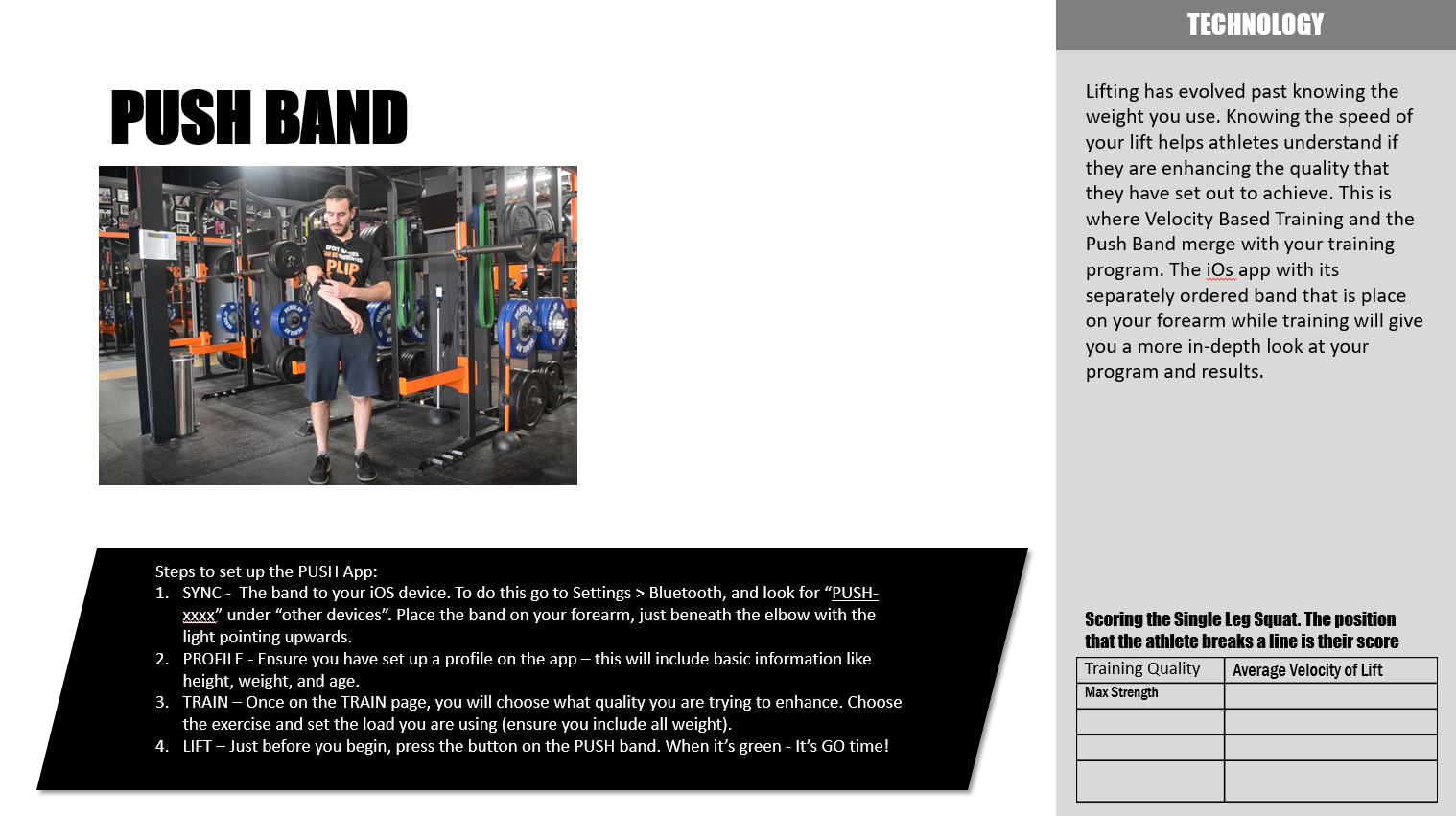
PUSH Band for Lift Analysis
Lifting has evolved past knowing the weight you use. Knowing the speed of your lift helps athletes understand if they are enhancing the quality that they have set out to achieve.
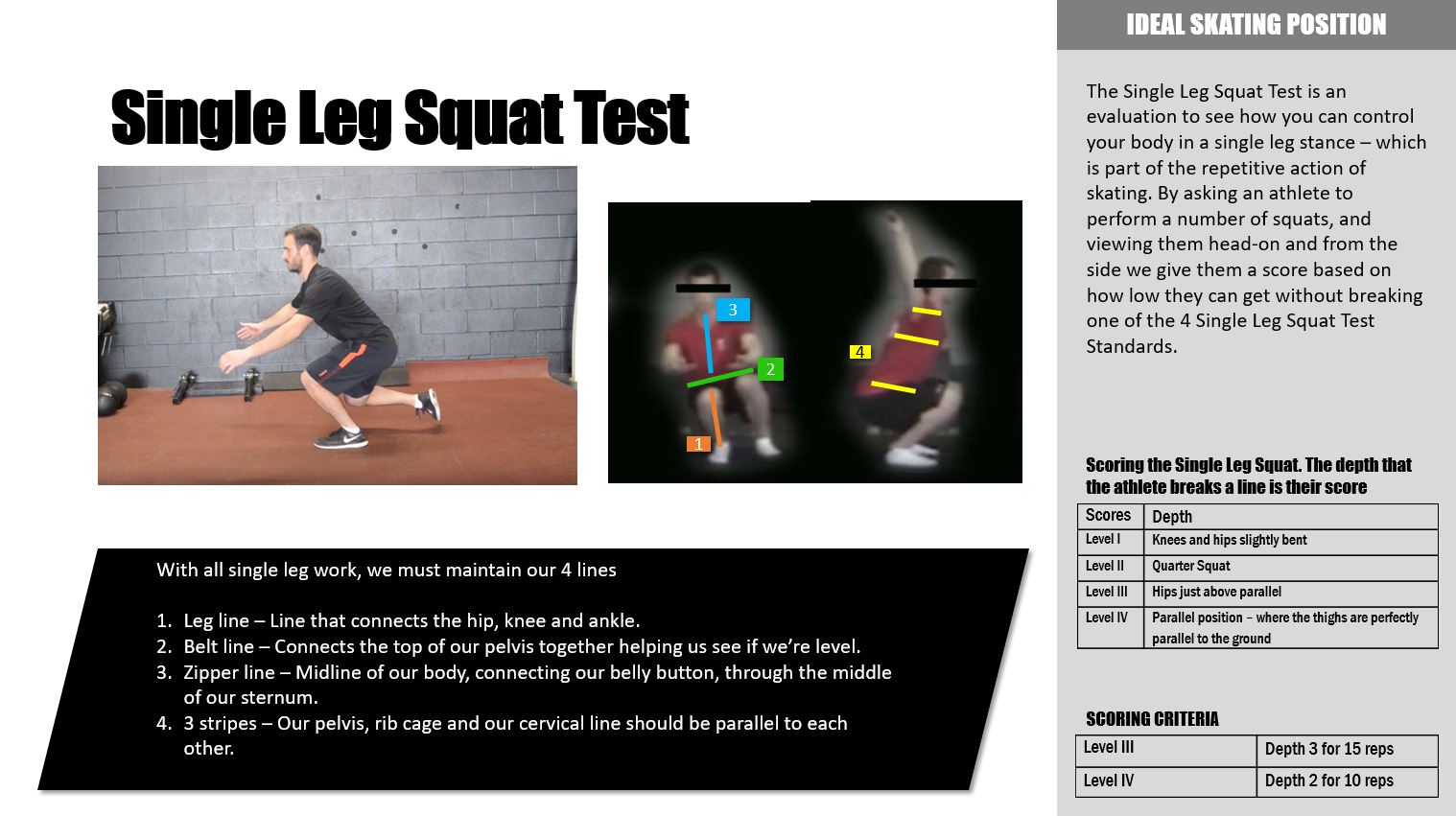
Single Leg Squat
The Single Leg Squat Test is an evaluation to see how you can control your body in a single leg stance – which is part of the repetitive action of skating.
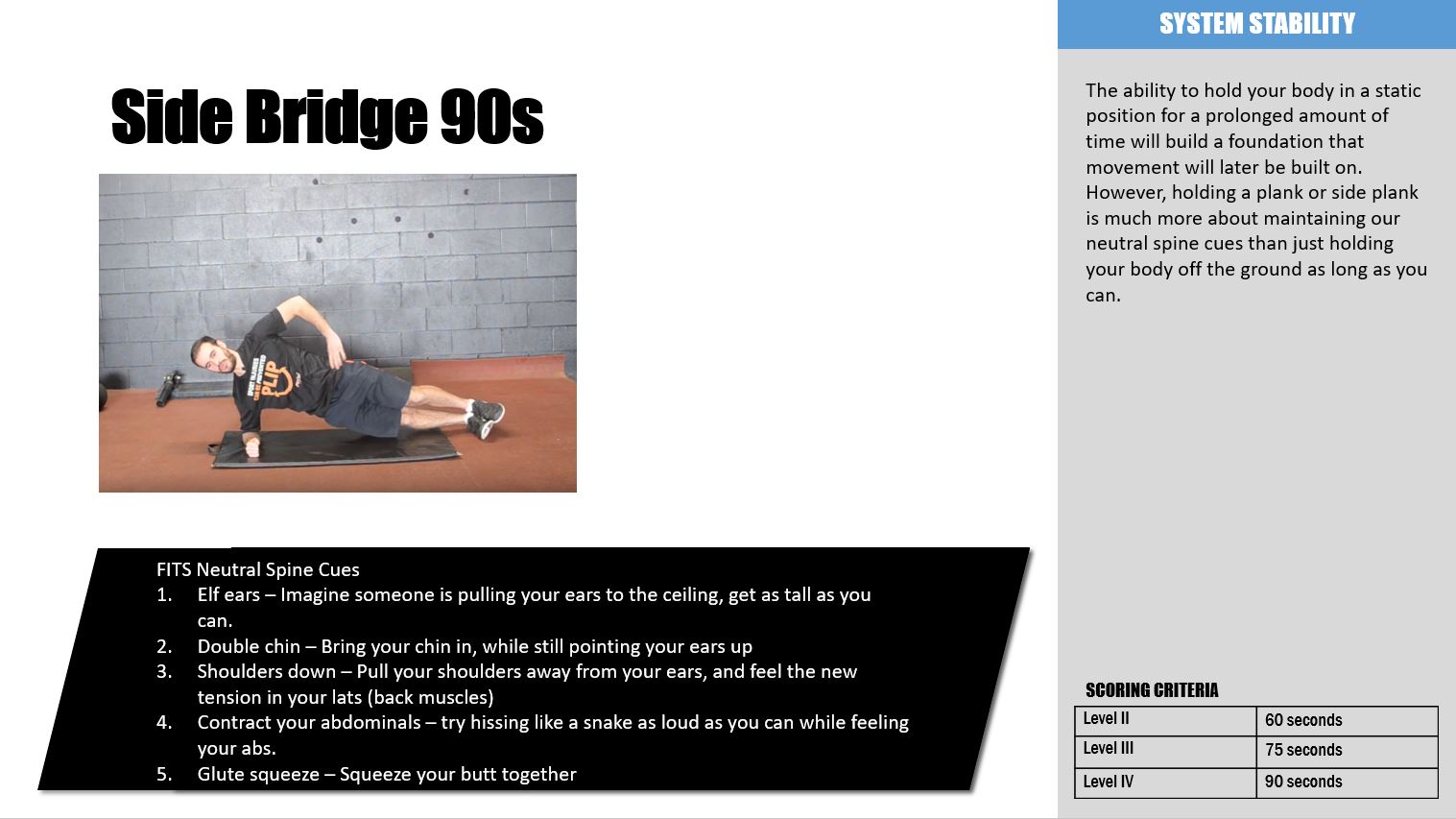
Side Bridge 90s
The ability to hold your body in a static position for a prolonged amount of time will build a foundation that movement will later be built on.
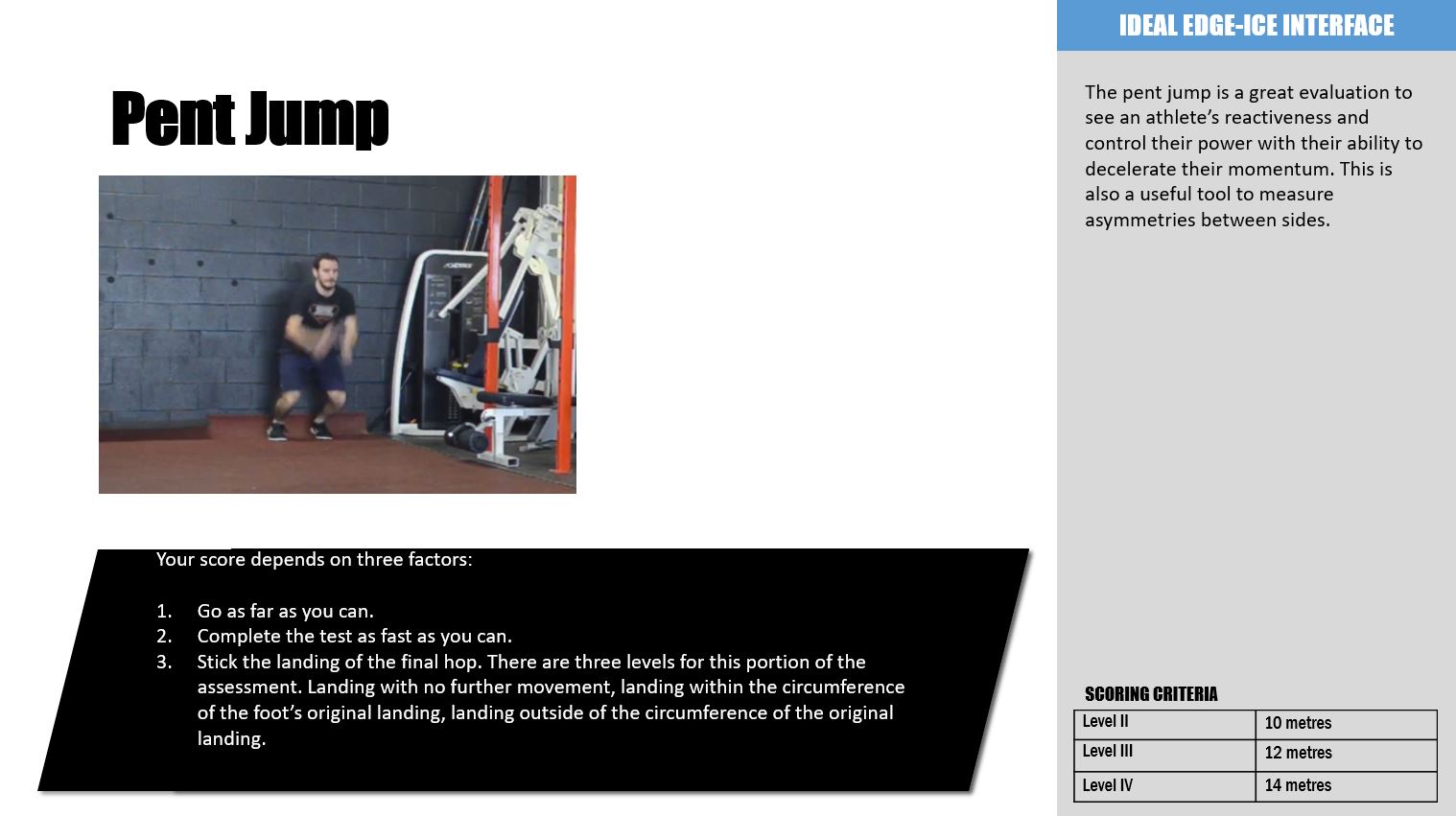
Pent Jump
The pent jump is a great evaluation to see an athlete’s reactiveness and control their power with their ability to decelerate their momentum.
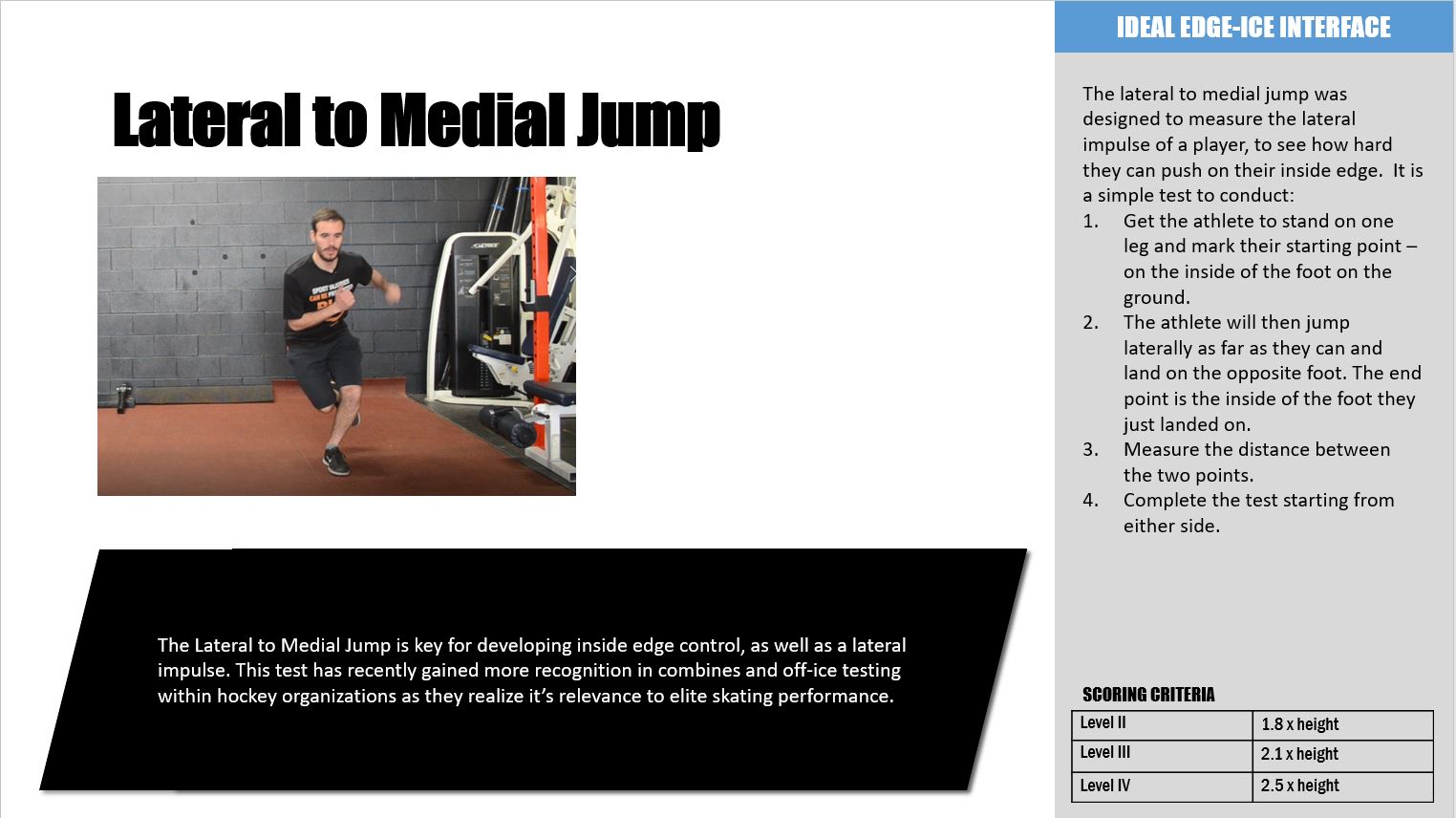
Lateral to Medial Jump
The Lateral to Medial Jump is key for developing inside edge control, as well as a lateral impulse.
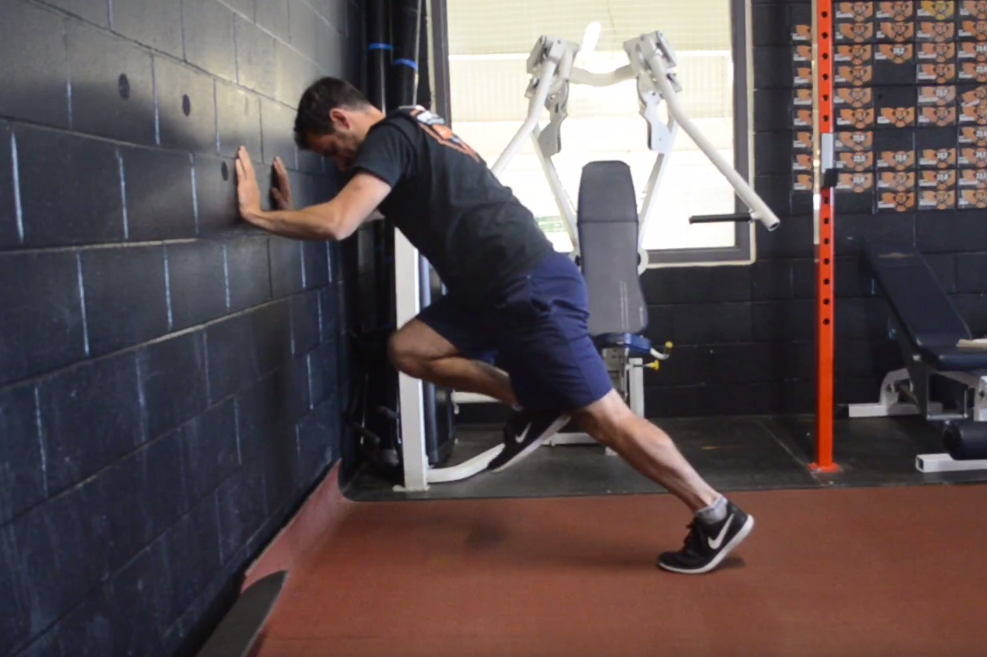
The FLOW Exercise
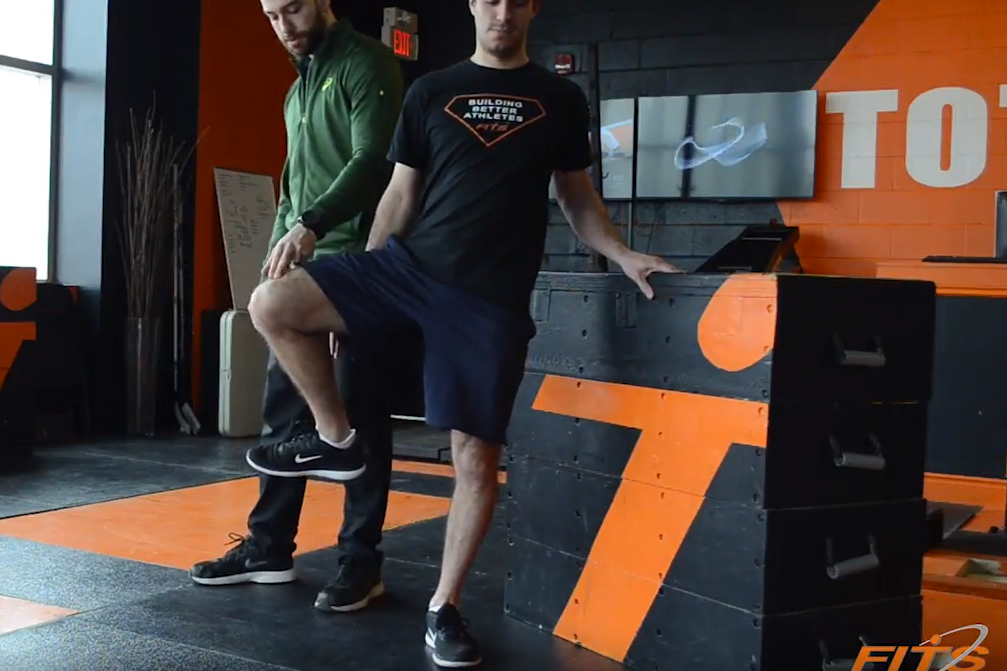
CARS Challenge
BLOG RESOURCES FOR HOCKEY
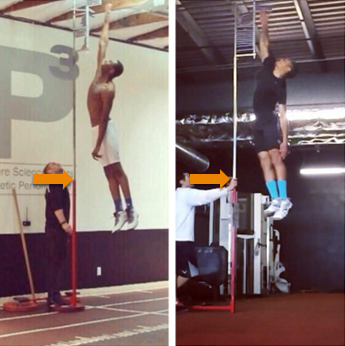
Why vertical for hockey players?
The vertical jump is used in nearly all athletic combines, including those for the OHL and NHL. Although this may be true with [...]
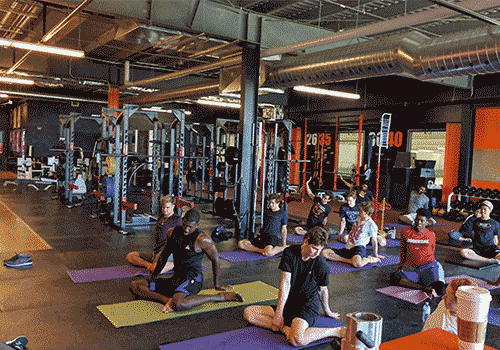
Top injury prevention strategies that you can start TODAY
Stats on injuries…Injury prevention data (introduction) Why do injuries occur? (signs vs. symptoms and understanding the biomechanics of injury … create a link [...]

THOUGHTS WHILE READING RESEARCH 3: THE HOCKEY TRIAD
What did I read[1, 2] Hammoud, S., et al., The recognition and evaluation of patterns of compensatory injury in patients with mechanical hip [...]
RATIONALE BEHIND THE HOCKEY TRIAD – THE VISCOUS CYCLE
There is a link between athletic pubalgia (AP) / sports hernia (SH), tendon pain and FAI[1-4] Weakness of the posterior abdominal wall is a [...]

Poor Skating Mechanics
Poor skating mechanics has many sources – hip mobility, leg strength, motor control, skating motor skill, thoracic mobility and trunk endurance. In our [...]
Does CORE endurance enhance hockey performance? NO
Planks, sit-ups, side-bridges are all great exercises. But do they improve or are they related to hockey performance. A group of researchers from Germany[1] [...]